
1. Vietnam’s Competitive Edge
- Strategic Geographic Location
- Proximity to China and Southeast Asia enables efficient supply chain integration3.
- Free trade agreements (FTAs) reduce export tariffs to key markets like the US and EU4.
- Cost-Efficient Labor & Workforce Quality
- Young workforce (avg. age 32.7) with high discipline and productivity57.
- Average monthly wages (~$205) remain lower than China and India58.
- Government Incentives & Infrastructure
- Tax exemptions (e.g., 4-year corporate tax holiday) and subsidized land for factories68.
- Samsung’s $18B investment in OLED production, including R&D centers in Hanoi23.
- Established Manufacturing Ecosystem
- 28 Samsung factories in Vietnam produce 80% of its global devices, including 50% of smartphones26.

2. India’s Strengths
- Large Domestic Market & Export Potential
- Growing smartphone demand in India reduces reliance on exports6.
- “Make in India” policies incentivize local production6.
- Labor Cost & Scale
- Competitive wages but lower efficiency than Vietnam (per Samsung’s internal assessments)7.
- Noida factory supports regional demand but faces 15% export tariffs to Western markets4.
- Diversification Strategy
- Samsung’s $12B investment in India aims to balance geopolitical risks6.
3. Key Comparison
| Factor | Vietnam | India |
|---|---|---|
| Labor Efficiency | Higher discipline, lower turnover7 | Larger workforce, slower adoption7 |
| Export Costs | Lower tariffs (FTAs)4 | 15% tariff to US/EU4 |
| Govt Support | Tax holidays, land subsidies68 | “Make in India” incentives6 |
| Production Scale | 80% of Samsung’s global output2 | Focused on domestic/regional needs6 |
Conclusion
Vietnam dominates Samsung’s high-end screen production (OLED/M-series) due to cost efficiency and infrastructure, while India serves as a strategic backup for regional demand and risk diversification.
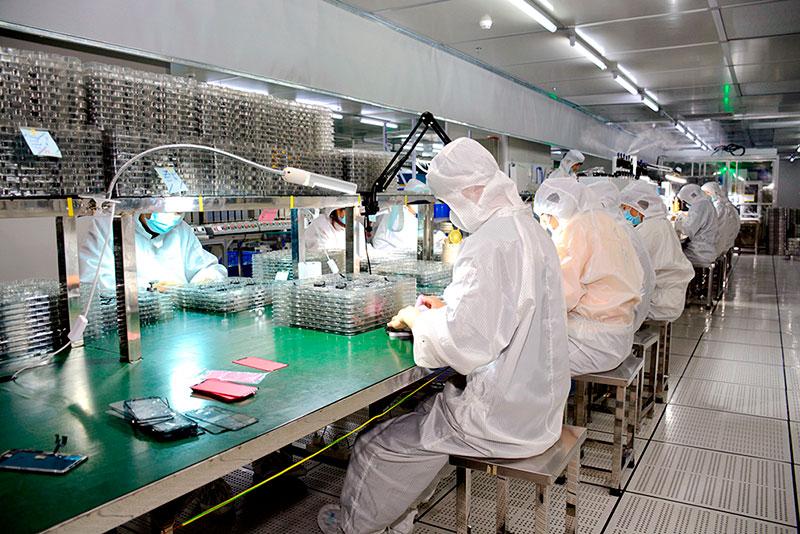
 IMAX OLED
Leave a comment